
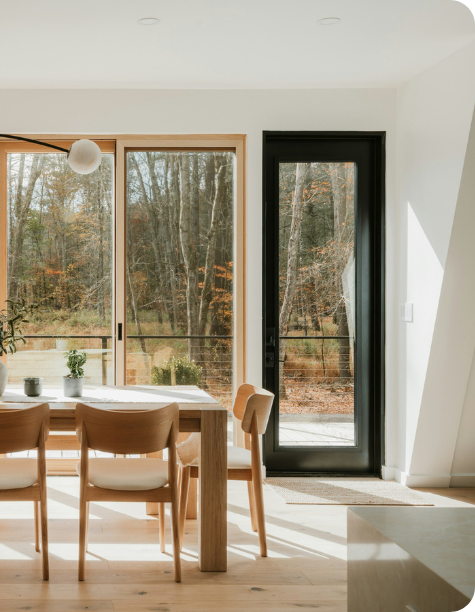
Incorporating Wood in Interior Spaces: Finding Balance Through Contrast and Connection
Wood has a timeless presence in interiors because it brings warmth, texture, and a natural sense of grounding that connects us to the outdoors. Whether through furniture, millwork, or architectural accents, introducing more wood into your home adds depth and character to a space. I often like to bring it in through details such as furniture, ceiling features, or custom cabinetry. Beyond aesthetics, wood supports a connection to nature — this is a core principle of biophilic design. Biophilic design engages multiple senses and contributes to comfort, health and well‑being.
Matching or Mixing: How to Work with Different Wood Tones
There are countless wood species, stains, and finishes to choose from. Where do you begin? One of the most common questions I hear is whether wood tones should match or contrast.
Personally, I lean toward layering tones and creating subtle contrasts rather than matching everything exactly. Perfectly matched wood can sometimes feel flat, whereas combining a few complementary tones adds depth and visual interest.
If your existing woodwork, like flooring or millwork, is in good condition and suits the space, there’s no need to change it. Instead, enhance it with contrast through furniture, lighting, or accent elements. Refinishing or repainting every surface isn’t always realistic or necessary.
Designing Within the Context of the Home
Every home tells a story and respecting that narrative is part of good design. In homes with strong architectural features or heritage details, like exposed beams, wall paneling, or original railings, the key is to selectively preserve the elements that define the character of the space.
For example, keeping original flooring and railings maintains the integrity of the home, while introducing contrast through a darker beam stain or painted wall paneling can modernize the feel without erasing its history. The goal is to strike a balance between evolution and preservation.
Trim, Walls, and the Role of Contrast
When it comes to trim and wall color, I often keep these monochromatic or tonal. This approach allows natural wood details, such as window frames or a beautiful dining table, to stand out as focal points. The result feels calm and cohesive, rather than busy.
Current Trends: Return of Richer Woods
Current design trends reflect a desire for grounded, tactile interiors that feel rooted and authentic. In recent articles, I’ve seen the terms Modern Heritage and Heritage Revival used to describe this shift, which point to a renewed appreciation for darker, more expressive wood tones.
Finishes like walnut, smoked oak, and deeper stained cherries are re‑emerging as thoughtful alternatives to the pale woods that dominated the past decade. These richer tones bring a sense of history and craftsmanship to a space, while pairing beautifully with soft neutrals, warm metals, and natural stone. The result is an interior aesthetic that feels both contemporary and timeless, with materials that carry depth, warmth, and a quiet confidence.
At MODTERRA, I see this as more than a trend — it’s part of a broader shift toward depth, texture, and emotional connection in spaces. Incorporating more wood into your home isn’t about following strict rules, it’s about creating harmony.